The 5 Niyamas
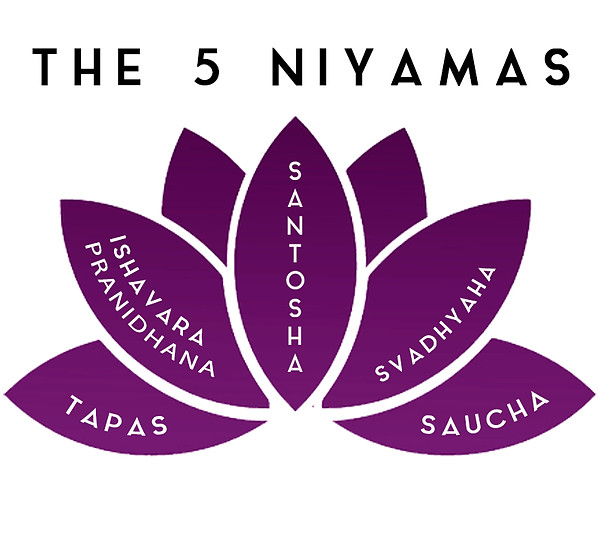
In Sanskrit, “Niyama” means “moral observance,” or “positive duties.” The 5 Niyamas are: Purity, contentment, self-discipline, self-study, and surrender. They represent how we relate to our self and our inner world.
Yoga has a strong philosophical foundation that begins with the Yamas and the Niyamas. These philosophies help to guide us in the ways we interact with the world and how we interact with ourselves. They are just as important as our asana practice and lay the groundwork for the remaining six limbs of yoga.
About
The Niyamas are not a list of obligations, but a reminder that real freedom comes through discipline. It is an invitation and at the same time, a list of tools, so that we can experience a calm, harmonious and blissful inner state. They reflect a more connected, conscious and pure expression of our personality, and they create a fertile environment in which we can mature and evolve.
The 5 Niyamas:
-
Saucha (purity: physical, emotional and mental)
-
Santosha (completeness, satisfaction)
-
Tapas (discipline, purification, austerity, sacrifice)
-
Swadhyaya (self-knowledge, self-study)
-
Isvara Pranidhana (surrender, faith, dedication to something superior)